
Systemic Failure and Institutional Negligence: Inside Doe v. Becoming Independent
A dependent adult’s abuse case exposes systemic failures inside Sonoma County’s disability‑care network.

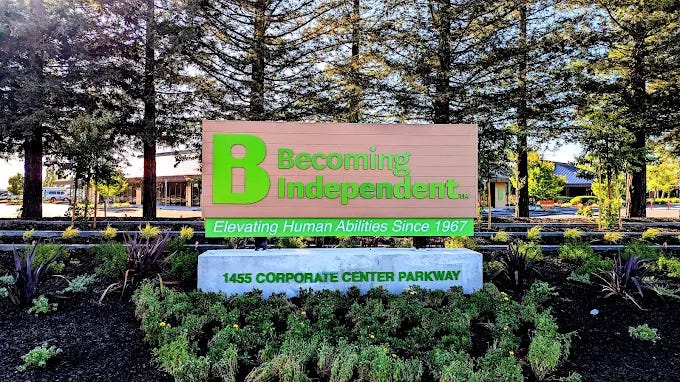
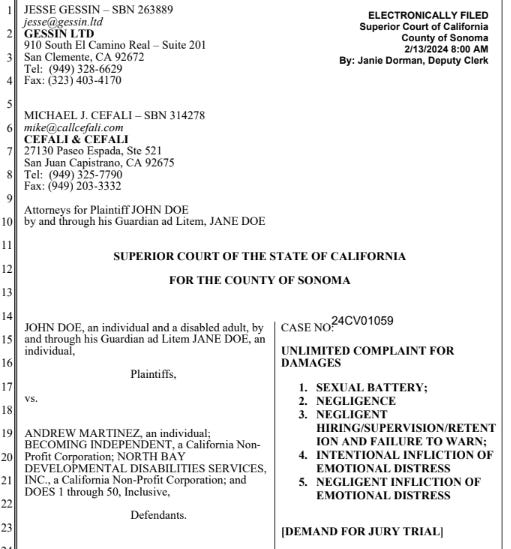
The lawsuit Doe v. Becoming Independent (Case No. 24CV01059) reveals a disturbing pattern of negligence, oversight failures, and institutional indifference within agencies entrusted to protect some of Sonoma County’s most vulnerable residents. Filed on February 13, 2024, the complaint details the sexual battery of a severely developmentally disabled adult—identified as John Doe—by his assigned caregiver, Andrew Martinez, while under the supervision of Becoming Independent (BI) and North Bay Regional Center (NBRC). Constituents should confirm all legal and political information with official sources.
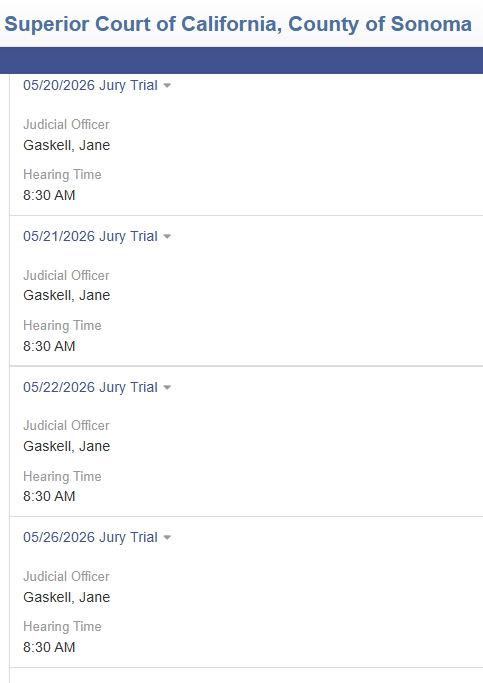
The case is active, with extensive filings, hearings, motions, and a jury trial underway as of May 2026.
The Plaintiff: A Dependent Adult Failed by the System
John Doe is described in the complaint as a severely developmentally disabled dependent adult with the mental capacity of a five‑year‑old. He lived alone but next door to his sister, Jane Doe, who served as his Guardian ad Litem. Doe required 15–21 hours per day of in‑home support—support that BI was contracted to provide through NBRC.
To protect her brother, Jane Doe installed a motion‑activated IP camera in the home. That camera would later become a silent witness to the failures that followed.
Becoming Independent’s Staffing Breakdown
The complaint outlines a series of alarming staffing issues:
Erratic scheduling by BI’s service manager
A BI employee arriving intoxicated and passing out on the client’s couch
BI supervisors ignoring or mishandling incident reports
A lack of oversight for overnight shifts
A supervisor (Reglores) who was also the aunt of the accused perpetrator
These failures created an environment where a vulnerable adult was left alone with an unfit caregiver for long stretches of time.
Andrew Martinez: A Troubled History Ignored
Martinez, hired by BI in 2021, had a documented history of instability:
A childhood marked by meth exposure, homelessness, and instability
A move to Windsor to “get away from the wrong people”
Living with his aunt—who was also his BI supervisor
A pattern of violent or dangerous behavior known to his family
Despite this, BI placed him in unsupervised overnight care of a severely disabled adult.
The complaint alleges that Martinez sexually assaulted the plaintiff multiple times between January and March 2022, including an incident on January 2, 2022, where the plaintiff returned home with a head injury and later reenacted Martinez choking him.
Institutional Negligence by BI and NBRC
The lawsuit asserts that both BI and NBRC:
Knew or should have known of Martinez’s dangerous propensities
Failed to supervise him
Failed to warn the plaintiff’s guardian
Failed to file required incident reports
Continued to employ him despite red flags
Lacked adequate systems to protect dependent adults
These failures form the basis of multiple causes of action, including negligence, negligent hiring/supervision, negligent infliction of emotional distress, and intentional infliction of emotional distress.
Court Proceedings: A Complex and Active Litigation
The docket shows:
Multiple motions to compel
Motions in limine addressing sensitive evidence
A cross‑complaint filed by Becoming Independent
A bankruptcy stay involving defendant Andrew Martinez
Jury selection, trial briefs, witness lists, and ongoing trial days through May 2026
This is not a simple civil case—it is a sprawling, multi‑party litigation involving criminal implications, protective orders, and extensive evidentiary disputes.
Readers may want to explore:
Case timeline
Key allegations
Institutional liability standards
The Human Cost
The complaint describes the plaintiff’s suffering in stark terms:
Emotional trauma
Physical pain
Loss of enjoyment of life
Ongoing therapy and medical needs
Humiliation and fear
For a dependent adult with limited communication abilities, the trauma is compounded by the inability to fully articulate what happened.
A System That Must Answer for Its Failures
This case raises broader questions about:
Oversight of regional centers
Vetting of in‑home caregivers
Conflicts of interest in staffing
Reporting failures
The vulnerability of disabled adults in California’s care system
The lawsuit seeks not only damages but injunctive relief—a court‑ordered mandate requiring BI and NBRC to implement real safeguards to prevent future abuse.
Readers may want to explore:
Oversight failures
Policy reforms