


Investor Fraud Sparks Federal Scrutiny
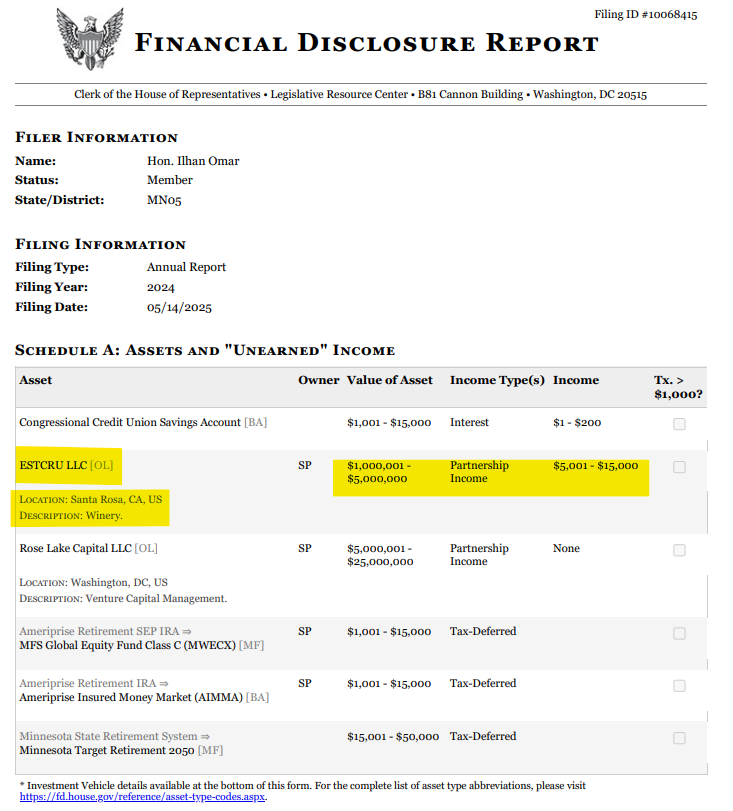
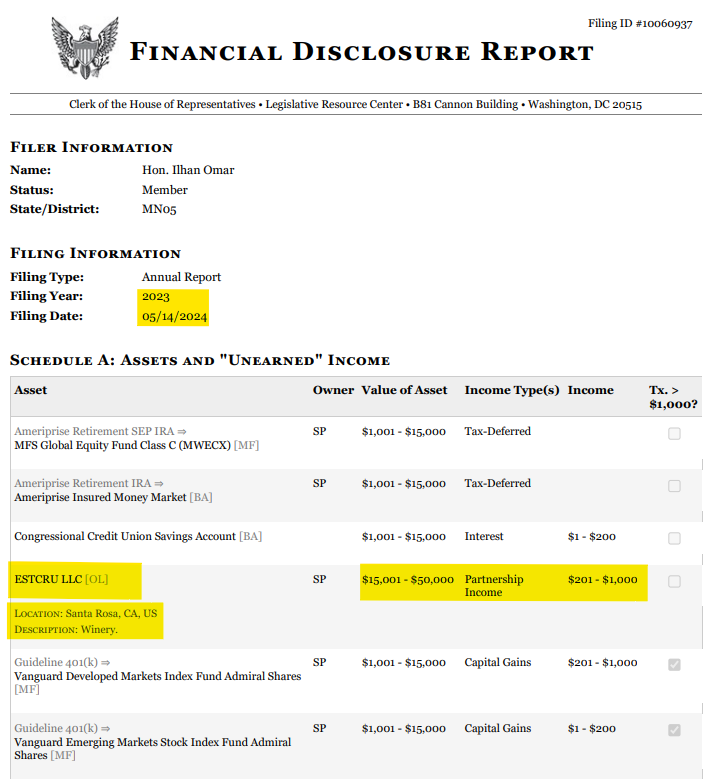
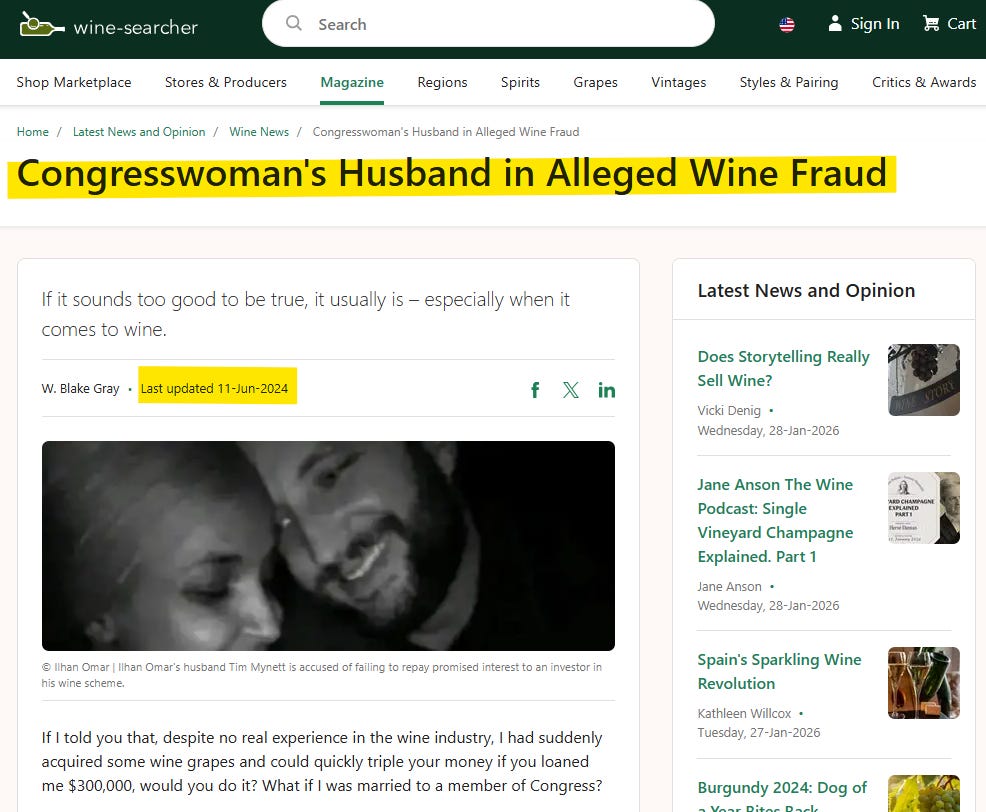
The unraveling of ESTCRU LLC began not in a vineyard or a tasting room, but in a courtroom. In June 2024, Rhode Island Current reported that a California investor had accused political consultant Timothy Mynett—husband of Rep. Ilhan Omar—and his longtime business partner William Hailer of swindling him in a winery venture. The venture in question was ESTCRU LLC, a wine company that, according to the investor, appeared to exist more on paper than in reality. The allegations triggered federal scrutiny after Rep. Omar’s 2025 financial disclosure listed ESTCRU as an asset valued at $5 million, a dramatic leap from the $50,000 valuation reported the year before.

A Winery With No Signs of Life
The investor claimed he was promised returns from a winery that showed no signs of actual operation: no working phone number, no active production, no visible staff, and no functioning business presence. Yet the company’s valuation skyrocketed. The House Ethics Committee and the Department of Justice began examining whether ESTCRU was being used to inflate assets or obscure political consulting income. What initially looked like a failed wine startup suddenly appeared to be something far more complex.
The Hopper Avenue Discrepancy
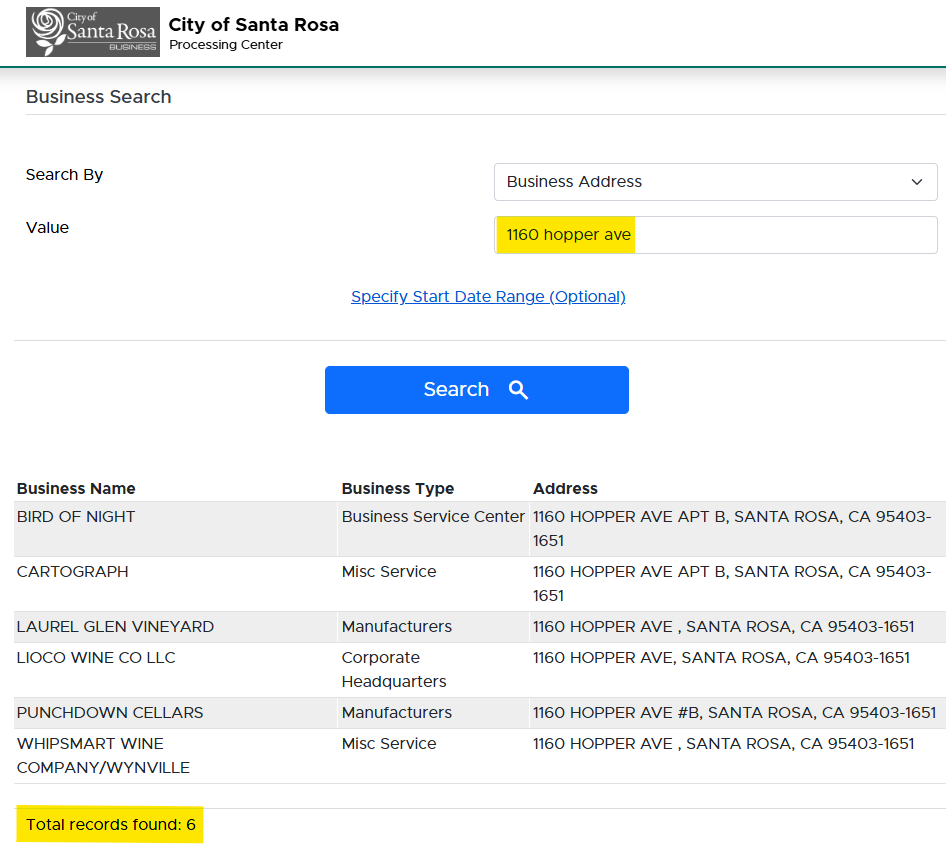
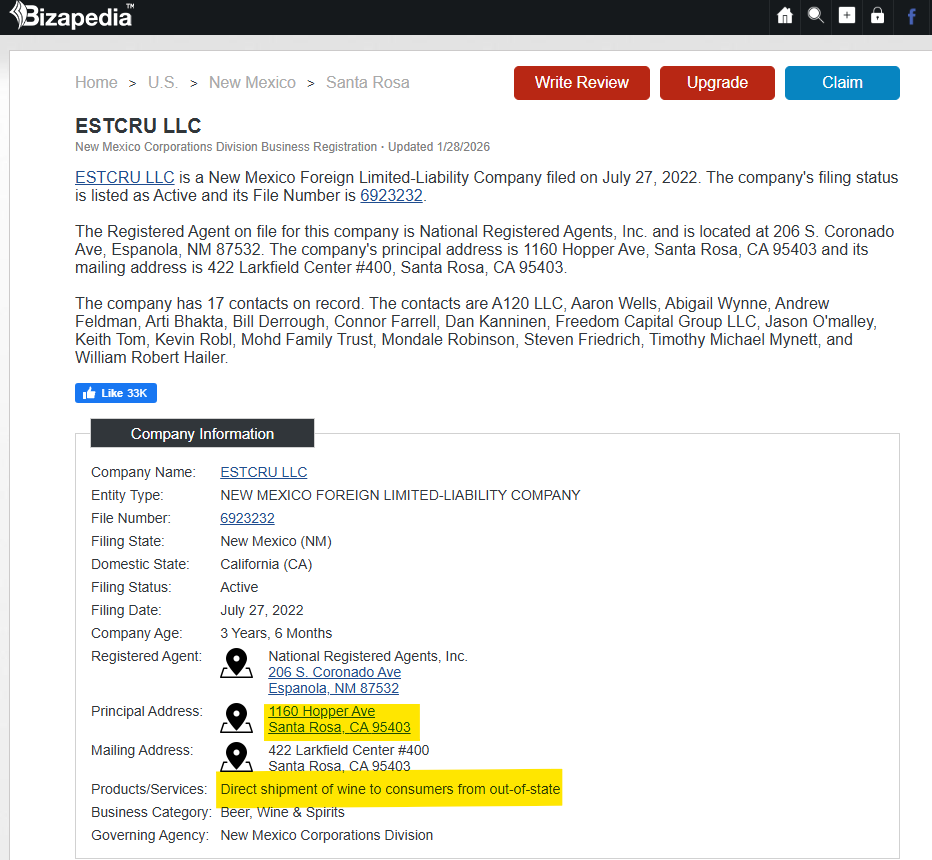
That complexity becomes even more apparent when examining ESTCRU’s footprint in Sonoma County. The company lists 1160 Hopper Ave Apt B, Santa Rosa as its principal address in its New Mexico foreign LLC registration. But according to the City of Santa Rosa’s Business Processing Center, no business license exists for ESTCRU at that location. Other tenants at the same address—Lioco Wine Co, Punchdown Cellars, Laurel Glen Vineyard, and several boutique producers—are properly licensed. ESTCRU is the outlier.
No License, No Production, Just Paper
The Hopper Avenue facility is a legitimate multi‑tenant wine production site, home to numerous small producers who share equipment and space. But ESTCRU’s filings do not match the typical pattern of a custom crush client. There is no ABC license in its name, no city business license, and no evidence of production. Instead, there is a trail of shifting business identities and a roster of politically connected managers.
A Trail of Shifting Aliases
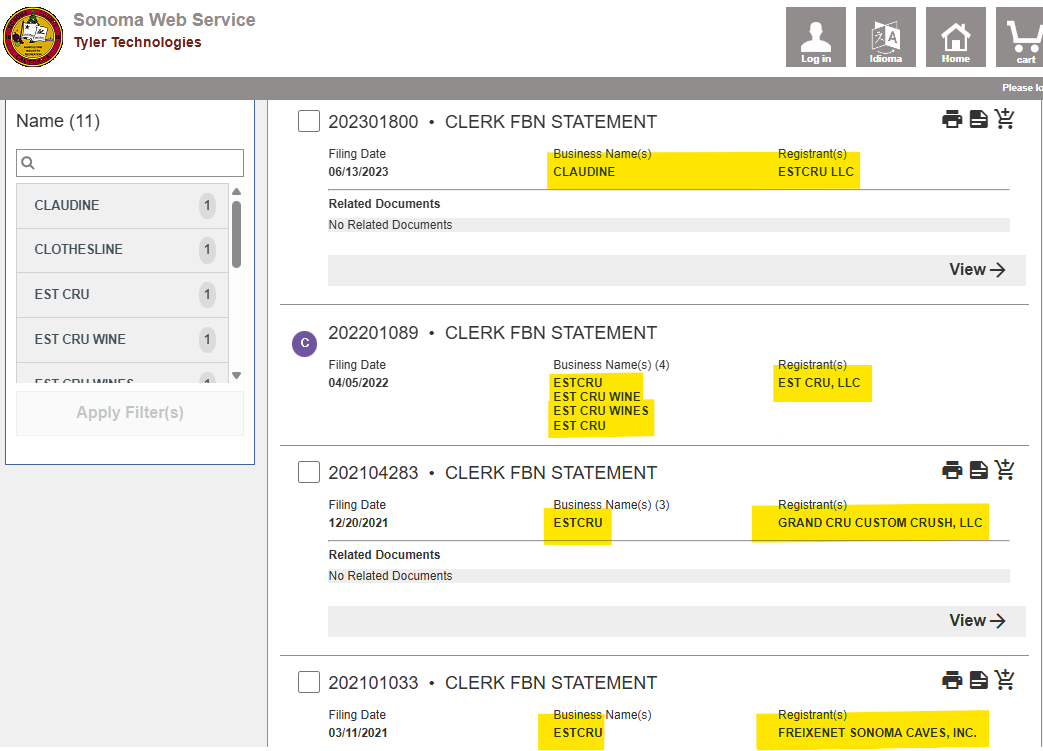
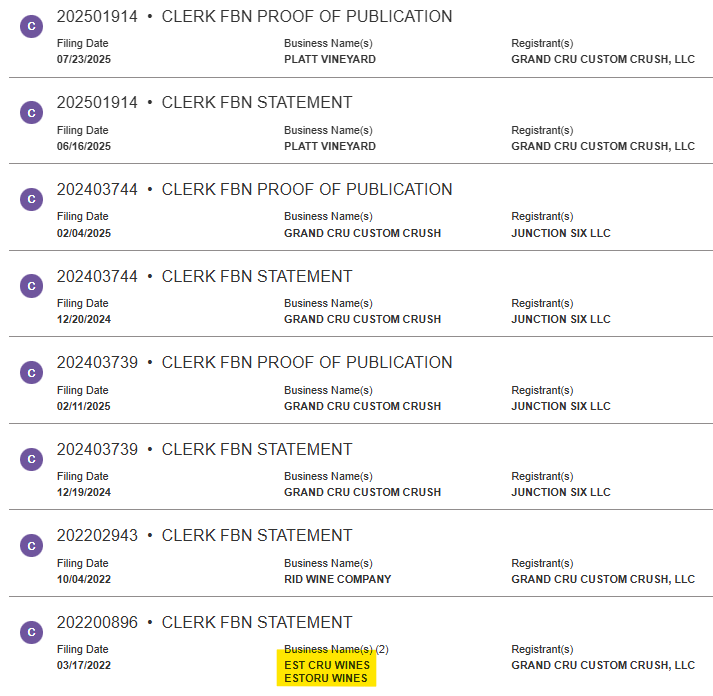
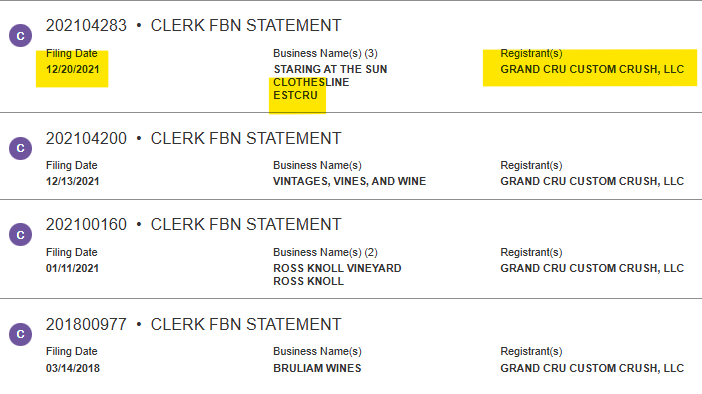
Over the past several years, ESTCRU has filed fictitious business names under a rotating cast of registrants. In 2021, the name “ESTCRU” was registered by Freixenet Sonoma Caves, Inc. Months later, the same name was filed again by Grand Cru Custom Crush LLC. In 2022, the filings shifted to EST CRU LLC, which registered multiple variations of the name: ESTCRU, EST CRU, EST CRU WINE, and EST CRU WINES. By 2023, the registrant changed again—this time to ESTCRU LLC, which filed a new business name, “CLAUDINE.”
Freixenet’s Role in ESTCRU’s Origins
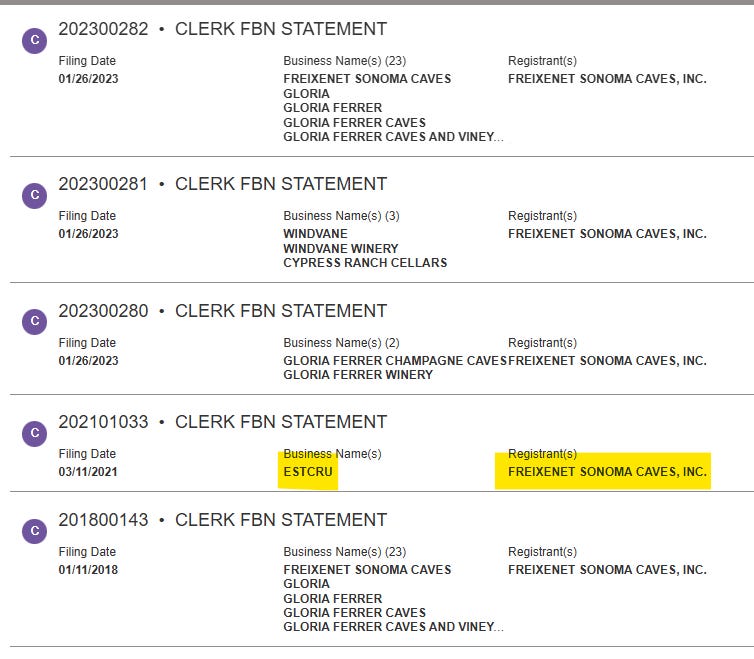
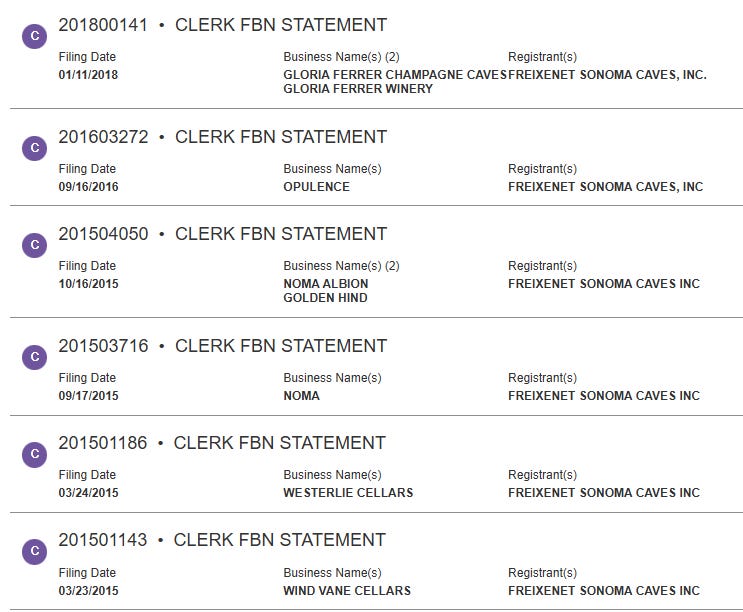
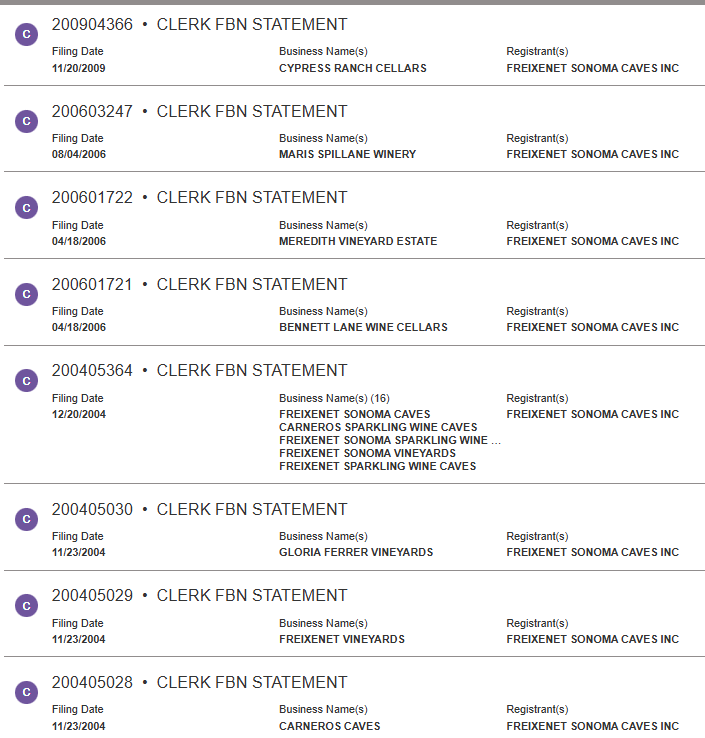
Freixenet Sonoma Caves adds another layer to the ESTCRU puzzle. As one of the largest and most established sparkling‑wine producers in the region, Freixenet has filed dozens of fictitious business names over the past two decades. Their filings span everything from “Gloria Ferrer Champagne Caves” to “Windvane Winery,” reflecting a long history of brand management and private‑label production. But the fact that Freixenet once registered the ESTCRU name suggests that the brand may have originated, or at least passed through, a major commercial facility before being absorbed into the politically connected LLC now under scrutiny. Whether this was a brief custom‑crush relationship, a dormant brand acquired by Mynett and Hailer, or a name repurposed without active production, the Freixenet connection underscores how ESTCRU’s identity has shifted across multiple entities — and how its paper trail winds through one of Sonoma County’s most prominent wine companies even as the venture itself shows no signs of licensed operation at its declared Santa Rosa address.
Grand Cru and Junction Six: The Alias Chain
The ESTCRU trail also runs through Grand Cru Custom Crush LLC, a wine production facility that has registered multiple aliases tied to ESTCRU. In 2022, Grand Cru filed fictitious business names for both EST CRU WINES and ESTORU WINES, suggesting a deliberate attempt to expand or rebrand the ESTCRU identity. These filings were made under Grand Cru’s name, not ESTCRU LLC, further muddying the ownership chain.
Complicating matters, Grand Cru itself was later registered by Junction Six LLC, a separate entity that now controls the Grand Cru name. This shifting web of registrants and aliases — from Freixenet to Grand Cru to Junction Six — underscores how ESTCRU’s brand has been passed between entities with no clear operational continuity, raising questions about whether the winery ever existed as a functioning business or simply as a paper asset with political and financial utility.
Pech Merle and the Branding Fog
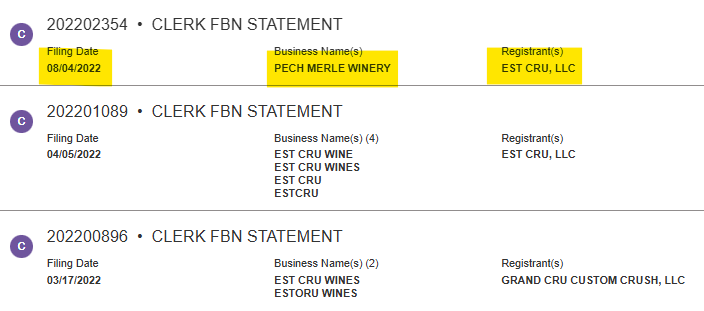
Another twist in the ESTCRU filings involves the name Pech Merle Winery, which was registered in August 2022 by EST CRU LLC—a separate entity from ESTCRU LLC but clearly part of the same naming ecosystem. Pech Merle is a legitimate, independently operating winery in Sonoma County, yet its name appearing under EST CRU LLC raises questions about brand borrowing, licensing ambiguity, or potential misrepresentation. Whether this filing reflects a short-term partnership, a placeholder registration, or an attempt to associate ESTCRU with an established wine label remains unclear. What is clear is that ESTCRU’s paper trail continues to blur the lines between legitimate wine operations and shell-like filings, further complicating efforts to trace its true business activity.
Who Controls ESTCRU?
The pattern suggests more than a rebranding. The shifting registrants and aliases create a corporate fog that makes it difficult to determine who actually controls the company and what, if anything, it produces.
Dual-State Strategy: California & New Mexico
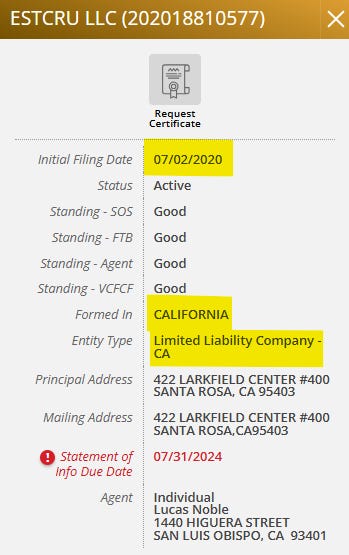
ESTCRU LLC’s dual registration—first as a California domestic LLC in 2020, then as a New Mexico foreign LLC in July 2022—raises questions about jurisdictional strategy, operational transparency, and potential regulatory arbitrage.
The original California filing, dated July 2, 2020, lists Sacramento as the designated office and names Democratic operative Will Hailer as the agent for service of process. The organizer, Lucas Noble, affirms that the company was formed to engage in “any lawful act or activity” permitted under California law. This broad purpose clause is standard, but the Sacramento address and political affiliations suggest the entity may have been designed with flexibility in mind—either for consulting, wine distribution, or financial structuring.
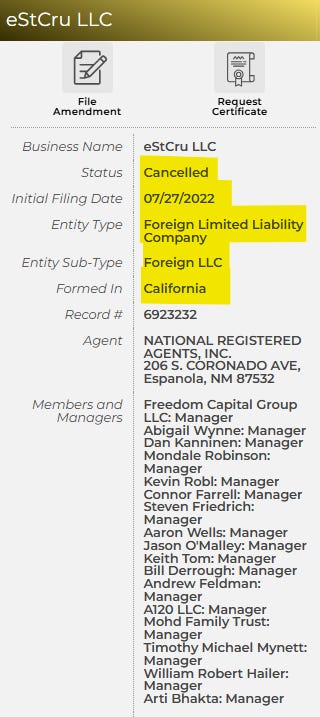
Two years later, ESTCRU LLC reappears in New Mexico as a foreign limited liability company, meaning it was formed elsewhere (California) but registered to operate in New Mexico. This move is notable because New Mexico offers greater privacy protections for LLCs, including the ability to list managers without disclosing ownership percentages or internal operating agreements. The New Mexico filing lists 17 managers, including political consultants like Tim Mynett, Dan Kanninen, and William Hailer, as well as opaque entities like Freedom Capital Group LLC and Mohd Family Trust. The principal address remains 1160 Hopper Ave Apt B, Santa Rosa, but the registration is handled through National Registered Agents, Inc., a common proxy service used to shield direct contact information.
The dual filings suggest ESTCRU may have been structured to operate across jurisdictions while minimizing public visibility. California’s transparency requirements—especially around campaign finance and business licensing—contrast sharply with New Mexico’s looser disclosure rules. By registering in both states, ESTCRU could maintain a nominal presence in California wine country while leveraging New Mexico’s privacy laws to obscure internal control and financial flows.
This layered structure is not inherently illegal, but in the context of investor fraud allegations, a missing business license, and a $5 million valuation jump in Rep. Ilhan Omar’s financial disclosures, it raises red flags. The filings hint at a company designed for flexibility, insulation, and possibly obfuscation—rather than straightforward wine production. Whether ESTCRU was ever a functioning winery or simply a paper asset remains a central question for investigators.
Cancellation Follows Public Exposure
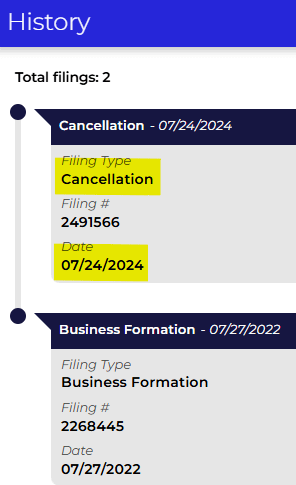
In July 2024, ESTCRU LLC’s New Mexico registration was formally cancelled, just weeks after investor-fraud allegations surfaced in national media. According to records, the cancellation occurred on July 24, 2024, following mounting scrutiny over the winery’s valuation and operations.
The timing of the cancellation strongly suggests that the entity was dissolved as the fraud came to light, further fueling questions about whether ESTCRU was ever a legitimate winery—or simply a paper asset used to inflate disclosures and obscure financial flows.
A Business License That Never Existed
The absence of a business license at its principal address is not a minor oversight. Santa Rosa requires all businesses operating within city limits to obtain a license, regardless of size or industry. If ESTCRU is conducting business from 1160 Hopper Ave Apt B, it is doing so without authorization. If it is not operating there, then why is the address listed in multiple state filings? And if the company is not operating at all, how did its valuation increase by 10,000 percent in a single year?
A Winery on Paper, Not in Practice
Taken together, the investor fraud allegations, the shifting business identities, the politically connected managers, and the missing business license paint a picture of a company that exists more robustly on paper than in practice. Whether ESTCRU is a failed wine venture, a shell entity used for political or financial maneuvering, or something else entirely remains unclear. What is clear is that the public record does not match the company’s stated operations, and the inconsistencies demand scrutiny.
As federal investigators continue examining the financial disclosures tied to ESTCRU, local regulators may also face pressure to determine whether the company is operating legally within Santa Rosa. For now, ESTCRU remains an enigma—a winery with many names, many managers, and no visible footprint at the address it calls home.
Amazing how a wine company can achieve 100X growth in one year while all other Sonoma County wineries are struggling with a shrinking market and overstock during that same period...
Great research! I live a couple miles from the Hopper address in Santa Rosa. It's just cheap industrial buildings.